
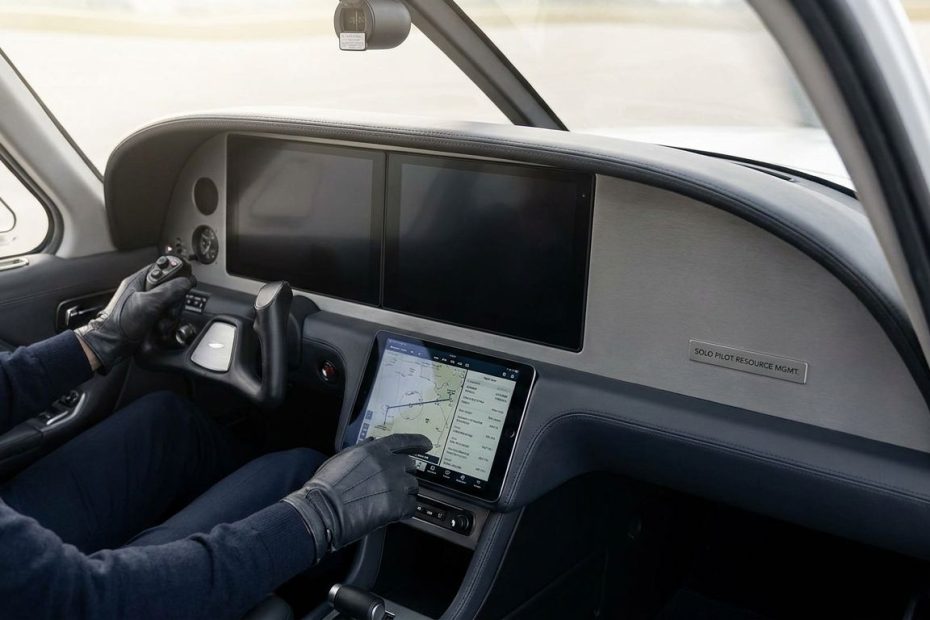
Single-pilot resource management is the discipline that keeps a solo flight organized, controlled, and safe when every decision, task, and correction rests with you. When you manage workload early, guard your margins, and use every available tool with intent, you lower the odds that a routine flight turns into a rushed one.
You need a method that holds up when weather shifts, avionics demand attention, air traffic control changes the plan, or fatigue starts to narrow your thinking. This article gives you that method in plain language, with practical habits you can carry into preflight planning, departure, cruise, approach, diversion, and the no-go decision.
What Is Single-Pilot Resource Management, And Why Does It Matter?
Single-pilot resource management means using every resource available to you, inside and outside the cockpit, to keep the flight under control. That includes your planning, checklists, avionics, autopilot, weather information, air traffic control support, aircraft systems knowledge, and personal discipline. When you fly alone, there is no second crewmember to backstop a missed callout, catch a wrong frequency, or question a poor decision. You become the pilot flying, pilot monitoring, navigator, systems manager, and final decision-maker all at once.
That is why single-pilot resource management is not a specialized skill reserved for turbine operators or instrument pilots. It applies to a local solo pattern session, a visual flight rules cross-country, a complex aircraft checkout, and an instrument flight rules trip in changing weather. The workload changes with the mission, yet the principle stays the same: you must protect your attention before the cockpit starts competing for it. Safe solo flying comes from staying ahead of the aircraft, not from catching up after the workload spikes.
Accident data keeps reinforcing the same lesson. Pilot-related errors remain a major share of general aviation accidents, and the most lethal events often involve weather, loss of control, and poor decisions made under pressure. You do not solve that with confidence alone. You solve it with structure, repeatable habits, and a disciplined way to sort urgent tasks from nonessential ones before the airplane gets ahead of you.
Single-pilot resource management also matters because solo flying removes the social friction that sometimes protects crews from bad calls. In a two-pilot cockpit, another person may challenge a rushed launch, notice fatigue, or suggest a delay. Solo, that internal conversation has to happen inside your own head, and it has to happen honestly. If your standards become flexible on the ramp, they usually become weaker in the air.
The strongest solo pilots are not the busiest or most confident ones. They are the ones who simplify early, brief thoroughly, respect personal minimums, and act before a manageable situation turns into a saturated one. That is the practical value of single-pilot resource management: it gives you a system for making solid decisions when your time and attention are limited.
How Can You Manage Workload During Busy Phases Of Flight?
Your first workload rule is simple: fly the airplane first. When the pressure rises, your priorities do not change. Control the aircraft, confirm your path, communicate what matters, then deal with the rest. A surprising number of solo-flight errors begin when a pilot looks down too long at a screen, chart, checklist, or message and allows altitude, heading, airspeed, or configuration to drift.
Busy phases of flight punish disorder. Departure, climb, approach, missed approach, diversion, and arrival into congested airspace all demand fast sorting. If you let programming, paperwork, checklist hunting, or radio management crowd the top of the list, your core flying task suffers. The disciplined move is to stabilize first. Hold altitude, set power, trim the aircraft, verify mode awareness if automation is engaged, and create a few seconds of thinking room before touching anything nonessential.
That habit becomes even more important in modern cockpits. A glass panel gives you more information, more capability, and more ways to get pulled head-down. Route changes, direct-to clearances, procedure loading, frequency swaps, weather overlays, and traffic displays can all improve safety when used correctly. They can also absorb your full attention at the worst possible moment. Better avionics do not guarantee lower workload. They only give you more tools, and tools demand management.
A useful way to handle busy moments is to break the task into a clean sequence. Stabilize the airplane, identify the immediate threat, decide what can wait, and execute one item at a time. If air traffic control issues an amended clearance while you are descending in bumps toward an approach, do not rush into button-pushing. Level your thinking before you program. Ask for delaying vectors if you need them. Request “stand by” when necessary. A short pause managed well beats a rushed compliance that leaves you behind the aircraft.
You should also build quiet cockpit habits before the workload spike arrives. Set expected frequencies in standby, brief likely approach and diversion options early, keep charts organized, and review the next two steps before you need them. Pilots often talk about task saturation as if it appears without warning. Usually it builds from small disorganization, deferred setup, and preventable head-down time. Tight cockpit discipline prevents a great deal of that.
Another smart workload practice is using standard personal flows for recurring events. A consistent climb flow, cruise scan, descent setup, and approach brief reduce mental drag because you do not waste attention deciding what comes next. Under stress, pilots fall back on habit. If your habit is clean, your cockpit stays cleaner when it counts.
What Are The Best Risk-Management Tools For Solo Pilots?
The best risk-management tools are the ones you actually use before every flight and revisit during the flight. For solo operations, the most practical set includes PAVE, IMSAFE, the 5P check, personal minimums, and a formal flight risk assessment tool. Each serves a different purpose. Together, they turn vague concern into a defined decision.
PAVE helps you review risk through four categories: Pilot, Aircraft, enVironment, and External pressures. This keeps your planning from becoming too narrow. You may feel current and rested, yet the aircraft may have deferred equipment, the weather may trend toward lower ceilings, and an appointment at your destination may be pulling you harder than you admit. A solo pilot needs that full scan because overlooked risk often sits outside the area getting the most attention.
IMSAFE remains one of the most useful self-check tools in aviation. Illness, medication, stress, alcohol, fatigue, and emotion or eating issues all change your margin, sometimes more than wind or ceiling. Fatigue alone can degrade judgment, short-term memory, and task management long before you feel incapable. If you are asking whether you are good enough to go, the answer may already be trending in the wrong direction. Solo flying leaves little room for pretending you are sharper than you are.
The 5P check gives you a clean way to reassess during the flight. It directs attention to the Plan, the Plane, the Pilot, the Passengers, and the Programming. That last item matters more than many pilots admit. Avionics workload can become a hazard of its own, especially when route changes, weather deviations, and approach setup begin stacking up. A midflight 5P review helps you catch drift before it becomes overload.
Personal minimums are where your real safety culture shows. Regulations define the legal floor. Personal minimums define the margin you are willing to protect. Ceiling, visibility, crosswind, runway length, fuel reserve, recency, night operations, terrain, convective weather distance, and equipment status all belong in that discussion. If those limits are invented on the ramp, they are too easy to bend. You need them set in advance, written down, and reviewed often.
A flight risk assessment tool adds one more layer of discipline. It gives numerical weight to factors like weather, fatigue, time of day, complexity, aircraft condition, recency, and route demands. That score does not replace judgment. It forces judgment to surface before external pressure distorts it. Many pilots think they are being conservative when they are actually being optimistic. A scored assessment exposes that gap quickly.
The value of these tools is not paperwork. The value is clarity. Risk management works when it helps you identify what changed, what matters most, and what decision protects your safety margin. If your method cannot do that quickly, it is too abstract for real cockpit use.
How Dangerous Is Single-Pilot Instrument Flight Rules Flying, And How Do You Make It Safer?
Single-pilot instrument flight rules flying can be safe, yet it becomes unforgiving when weather, route changes, and avionics management peak together. Flying in cloud removes visual margin, compresses your time, and places greater demand on scan discipline and systems management. You do not get to drift mentally during instrument conditions. Small distractions become navigation errors, altitude deviations, unstable approaches, or missed cues that matter a great deal.
The risk is not instrument flying alone. The risk is stacked complexity. Add turbulence, icing potential, convective weather nearby, nonstandard reroutes, an unfamiliar avionics setup, fatigue, or a delayed launch into lowering weather, and your spare capacity shrinks fast. That is why single-pilot instrument safety depends on reducing complexity before you launch and reducing it again the moment conditions start moving against you.
Your best defense is preparation that removes decisions from the highest-workload moments. Brief arrivals and approaches early. Load likely procedures in advance when appropriate. Review missed approach instructions before intercept. Set minimums, frequencies, and course guidance before you need them. Confirm autopilot modes and failure procedures before entering weather, not after the cockpit gets busy. Instrument flying rewards early setup and punishes improvisation.
Autopilot can be one of your most valuable resources in actual instrument conditions when it is used with discipline. A properly managed autopilot buys time for checklists, weather review, reroute entry, and approach briefing. It can also protect aircraft control when turbulence, fatigue, or heavy communications begin to split your attention. Yet autopilot does not remove responsibility. You must know the active mode, the armed mode, what the system will do next, and what you will do if it disconnects unexpectedly.
Another safety marker is the willingness to simplify the mission. Ask for delaying vectors. Request a hold if needed. Take the longer runway. Accept a less complex arrival. Divert before fuel, weather, and workload combine into a narrow corner. Pilots get into trouble when they treat simplification as defeat. In solo instrument flying, simplification is disciplined command.
Weather deserves blunt treatment here. Weather accidents in general aviation remain disproportionately fatal, and visual flight rules flight into instrument meteorological conditions continues to be one of the deadliest traps in the system. You should treat any plan that leaves no room for deterioration as flawed from the start. Single-pilot instrument safety begins long before engine start, with a launch decision built on margin rather than optimism.
When Should You Divert, Delay, Or Cancel A Solo Flight?
You should divert, delay, or cancel the flight the moment your safety margin starts shrinking faster than you can rebuild it. That point often arrives before anything looks dramatic. Ceilings start trending down. The crosswind is within limits yet no longer within comfort. A reroute adds time and fuel burn. The airplane is legal but carrying an equipment issue that raises workload. You are fit to fly, yet not at your best. These are not minor details. They are early warnings.
One of the most dangerous habits in solo flying is waiting for certainty. By the time the need to divert feels undeniable, the workload may already be elevated, the options narrower, and your thinking less flexible. Good solo decisions are usually made early and quietly. A delay on the ground feels inconvenient. A diversion with healthy fuel, daylight, and good alternates feels manageable. The same decisions made later can feel costly and rushed.
External pressure is often the hidden driver. A meeting, family expectation, aircraft reservation, checkride, hotel booking, or simple pride can distort what otherwise looks like objective planning. Solo pilots need to be especially alert to this because there is no one beside you to say the obvious thing out loud. If your reasoning starts focusing on why you “should still be able to make it work,” you need to stop and examine whether the mission is now controlling you.
Delay is often the smartest and least celebrated option. A thirty-minute wait for weather movement, traffic volume, a better briefing, or a mental reset can restore margin without ending the trip. Cancellation is also a valid operational decision, not a failure of nerve. Experienced pilots tend to remember the flights they should not have launched more vividly than the ones they canceled. That memory matters because aviation rarely punishes conservative judgment.
Diversion should also be normalized in your planning. Pick realistic alternates before departure. Identify fuel checkpoints. Review likely turnback points over terrain or weather. If you only start searching for options after the plan has broken down, your decision window is already compressed. Diversion becomes easier when it is built into the mission from the beginning rather than treated as a last-resort event.
You should make these calls with objective triggers whenever possible. Minimum fuel reserve, ceiling trend, visibility drop, crosswind threshold, daylight limit, fatigue marker, icing report, avionics issue, or repeated task saturation can all serve as hard lines. A trigger is useful because it limits bargaining. Once the trigger is met, the action is already decided.
How Should You Use Automation Without Becoming Dependent On It?
You should use automation to reduce workload, preserve aircraft control, and improve accuracy, but never to outsource awareness. That means knowing what is armed, what is active, what mode change is coming next, and what the aircraft will do if you do nothing. Mode confusion remains one of the most common ways advanced avionics add risk to a solo flight. If you cannot state what the system is doing right now, you are already behind it.
Good automation management starts on the ground. You should know how to engage and disengage the autopilot cleanly, how altitude capture works, how vertical navigation behaves in your specific system, how navigation source switching affects guidance, and how to recover from a wrong selection quickly. Many pilots know the basics in calm conditions but become slow and uncertain when bumps, radio traffic, and reroutes arrive together. That gap matters most when you are alone.
Automation is valuable because it can act as a workload reserve. In cruise, climb, descent, and instrument conditions, it buys you time to brief, verify, and communicate. It can prevent small control deviations from multiplying while you complete a necessary task. Yet the reserve only exists if you remain engaged. If the autopilot hides a growing situational awareness problem, it is not helping you. It is postponing the bill.
You should also know when not to use it. If the automation is behaving unexpectedly, if a phase of flight demands manual precision you can manage comfortably, or if your attention is getting pulled toward mode management rather than aircraft control, hand-flying may be the cleaner choice. The goal is not maximum automation use. The goal is the lowest total workload with the highest situational awareness.
Proficiency matters here. You need regular manual flying to maintain trim control, instrument scan, energy management, and confidence during partial-panel or automation failures. At the same time, you need recurrent practice using the automation as it is designed to be used in real operations. A pilot who avoids the autopilot out of principle is leaving a valuable resource unused. A pilot who leans on it without understanding it is creating a different hazard. Balance comes from training, not preference.
One practical rule helps: if programming takes your eyes and attention away from basic flight duties for more than a brief moment, stop programming. Re-stabilize, ask for time, engage appropriate automation if available, or defer the task. The airplane does not care how elegant your avionics setup looks. It only responds to what you manage well.
How Do You Build Better Decision-Making Before A Flight Turns Into An Emergency?
You build better decision-making by making fewer cockpit choices under pressure. Strong solo judgment is rarely dramatic. It shows up in the quiet habits that keep you from being surprised: a full weather review, a hard look at fatigue, realistic fuel planning, early approach setup, organized charts, clean checklist use, and predetermined triggers for delay or diversion. Good decisions become more reliable when they are made early and repeated often.
Preflight briefing should include more than route and weather. You should identify the top threats for that mission and define your response before departure. Terrain, convective activity, icing exposure, density altitude, runway length, night arrival, passenger pressure, avionics complexity, recency, and alternate availability all deserve attention. When you name the threats plainly, they become easier to monitor and harder to ignore.
You should also rehearse key transitions mentally. Departure procedure, expected reroute points, likely frequencies, descent planning, missed approach, and diversion fields are all easier to manage when they have already been reviewed once. This is not about memorizing every branch of the flight. It is about reducing decision lag when the routine plan changes. Under pressure, prepared pilots move sooner and cleaner.
Midflight discipline matters just as much. A quick self-audit at set intervals keeps small problems from becoming linked ones. Are you ahead of the airplane or chasing it? Is the plan still valid? Is the fuel picture still sound? Has the weather changed? Are you getting tired? Is the programming now becoming its own workload problem? These are simple questions, yet they catch many of the issues that later show up in incident reports.
You should pay close attention to the signs of rising saturation. Missing radio calls, repeating entries into the avionics, forgetting checklist items, narrowing your scan, fixating on one issue, and feeling rushed are all meaningful cues. Pilots sometimes treat these as ordinary stress. They are operational warnings. The correct response is to reduce complexity immediately, not to power through and hope the cockpit settles down on its own.
Decision-making also improves when you normalize saying no. If your identity as a pilot depends on always launching, always pressing on, or always proving you can handle more, your judgment will eventually bend around that identity. The stronger standard is simpler: execute the flight only when the margin supports it, and walk away when it does not. That is not caution for its own sake. It is command discipline.
What Is The Best Way To Practice Single-Pilot Resource Management?
- Set personal minimums before flight.
- Use PAVE, IMSAFE, and the 5P check.
- Stabilize the aircraft before programming avionics.
- Use automation to lower workload, not replace awareness.
- Divert or cancel early when margin starts shrinking.
Build Margin Early And Fly Solo With More Control
Safe solo flight is built long before the airplane reaches a busy approach, a weather decision point, or a reroute in cloud. If you manage workload early, use structured risk tools, keep automation under control, and act on shrinking margins before they turn urgent, you give yourself room to think and room to maneuver. That is what single-pilot resource management delivers at its best: not extra complexity, but cleaner decisions under pressure. You do not need a perfect flight to be a disciplined solo pilot. You need repeatable habits that protect aircraft control, preserve awareness, and keep the plan flexible when conditions change. If sharper cockpit judgment and safer solo operations matter to you, keep building those habits one flight at a time.

Robert Wilkos is the co-founder of VIPJets.com and a private aviation executive leading luxury charter services through a global network of 10,000+ aircraft. He champions rigorous Wyvern/ARGUS safety standards, 24/7 concierge support, and flexible options like the 25-Hour Jet Card, along with ground and air-medical transport.