
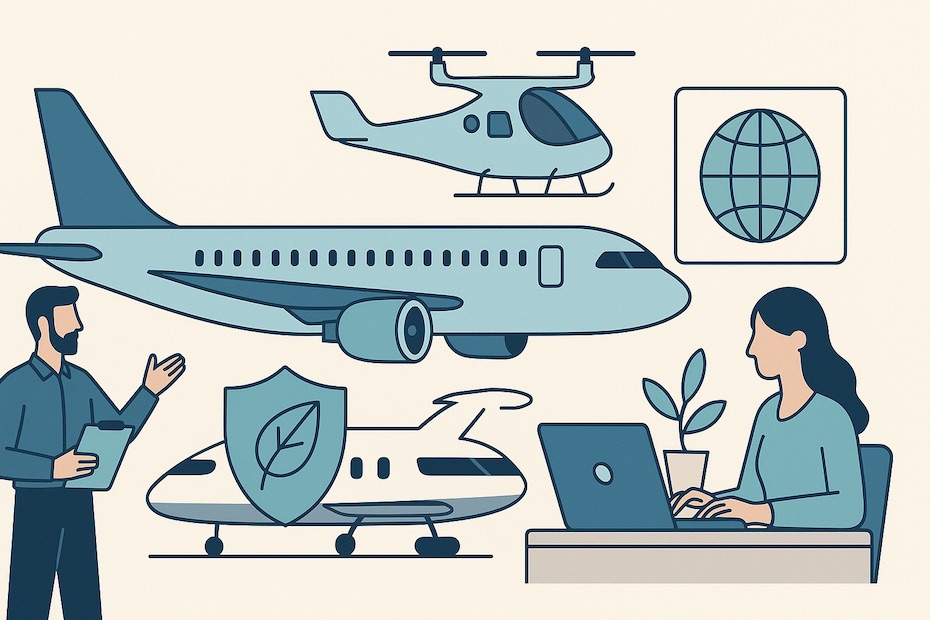
Aviation startups are reshaping the industry by targeting propulsion, mobility, sustainability, and digital services. These ventures combine technical innovation with entrepreneurial drive to open new opportunities.
You’ll see how startups in aviation emerge, what makes them succeed, and what barriers they must overcome. Expect insights into niches, business models, and scaling strategies that define this demanding sector.
What kinds of aviation startups are gaining traction now?
The most active segments today include propulsion innovation, eVTOL (electric vertical takeoff and landing), digital marketplaces, sustainability initiatives, and advanced training systems.
ZeroAvia, for instance, is working on hydrogen-electric engines designed to enable regional flights with zero emissions. Loft Dynamics, on the other hand, has built VR-based flight simulators certified by regulators. These products address real gaps: cleaner energy and affordable training.
You also see aviation marketplaces like Flapper, which allow customers to book seats on private flights using an app. This model provides scalability without heavy asset ownership, making it attractive for founders and investors alike.
Why is aviation entrepreneurship riskier than other industries?
Unlike consumer tech, aviation carries higher costs and stricter oversight. Certification processes take years, requiring testing, safety validation, and compliance with FAA or EASA rules.
An MVP in this field might cost tens of millions before it ever generates revenue. In addition, insurance, maintenance, and infrastructure requirements increase overhead dramatically.
Because mistakes in aviation have no tolerance margin, credibility is everything. As a founder, you must build a reputation for safety and compliance from the beginning. Without it, your startup risks losing both investors and customers.
How do you identify a viable niche within aviation?
You identify viable niches by observing where incumbents move slowly or cannot serve new demand effectively.
Examples include underserved regional air routes, retrofitting existing aircraft with greener engines, predictive maintenance systems powered by AI, and marketplace models for business aviation.
If you want traction, focus on problems with clear demand and measurable outcomes. Whether it’s reducing emissions, cutting operating costs, or improving pilot training, your niche must deliver visible value.
What are the critical success factors for aviation startups?
You need strong technical credibility, well-documented safety processes, and trusted partnerships. Aviation thrives on reputation—regulators, airlines, and passengers will only engage with startups that prove reliability.
Building an early relationship with regulators is critical. By involving compliance experts from day one, you reduce certification delays later. Strategic partners also matter: OEMs, infrastructure operators, and airlines provide both customers and proof of legitimacy.
Capital runway is another factor. Aviation ventures must plan for long lead times. Unlike software companies that pivot quickly, aerospace startups operate on cycles measured in years, not months.
What funding and business models are most effective?
Most aviation startups succeed with hybrid hardware-software models. For example, a company may develop electric propulsion engines but also monetize through data analytics and monitoring platforms.
Marketplace models are another proven path. Platforms that aggregate flights and offer flexible booking, like Flapper, reduce capital exposure by avoiding fleet ownership.
Investors typically provide larger rounds compared to other sectors, since aviation has high upfront costs. Series A or B rounds in this industry often exceed $50 million. Securing such funding requires not just a strong vision but also demonstrable technical milestones.
How do startups navigate certification and regulatory hurdles?
Certification requires a proactive strategy. Rather than waiting until prototypes are built, you involve certification authorities from the start.
You can also break down your solution into smaller certifiable components. For example, a propulsion startup may first certify fuel cell components before seeking approval for an entire powertrain.
Transparency builds trust. Maintaining accurate documentation, testing logs, and quality audits shows regulators and partners that your company prioritizes safety. If regulators sense shortcuts, your project could face years of delay.
What scaling paths and exit strategies are realistic?
Most aviation startups don’t aim to become airlines. Instead, they scale by licensing technology, selling components, or forming joint ventures with major manufacturers.
Boom Technology’s supersonic aircraft project, for example, is designed to supply planes to airlines rather than operate routes. ZeroAvia follows a similar strategy with hydrogen-electric propulsion—licensing rather than fleet ownership.
Other exits include acquisitions by aerospace giants, IPOs once revenue is stable, or hybrid models where startups operate small fleets to validate technology before selling broadly.
What new trends will shape aviation entrepreneurship in the next decade?
Emerging trends show where opportunities are forming:
- AI copilots: Language model systems are being tested for procedural assistance in single-pilot cockpits.
- Urban air mobility: eVTOL aircraft, like those developed by Eve, are expected to enter service by 2026.
- Sustainable propulsion: Hydrogen and electric power remain top priorities for decarbonizing aviation.
- VR training: FAA- and EASA-certified simulators reduce training costs and improve accessibility.
By aligning your startup with one of these vectors, you increase your chances of attracting both investment and early customers.
What challenges do founders frequently underestimate?
Many underestimate the time and resources required for certification. Projects that appear technically sound often stall because compliance pathways weren’t designed early enough.
Another common oversight is underfunding the infrastructure side of the business. Electric or hydrogen propulsion startups, for example, must also ensure charging or refueling networks exist.
Finally, founders often misjudge customer adoption cycles. Airlines, airports, and governments make decisions slowly. Your startup must survive long enough to bridge those cycles.
What makes aviation startups succeed?
- Focus on niches like eVTOL, propulsion, or marketplaces
- Build credibility with regulators and strategic partners
- Secure long funding runways and plan certification early
In Conclusion
Aviation entrepreneurship requires more than big ideas. It demands patience, technical rigor, and regulatory mastery. If you identify the right niche, secure the right partners, and align with long-term trends, you can build a venture that reshapes how people and goods move through the skies.
Want to discuss strategies for funding or scaling your aviation venture? Let’s connect—visit my website and take the next step in your startup journey.

Robert Wilkos is the co-founder of VIPJets.com and a private aviation executive leading luxury charter services through a global network of 10,000+ aircraft. He champions rigorous Wyvern/ARGUS safety standards, 24/7 concierge support, and flexible options like the 25-Hour Jet Card, along with ground and air-medical transport.